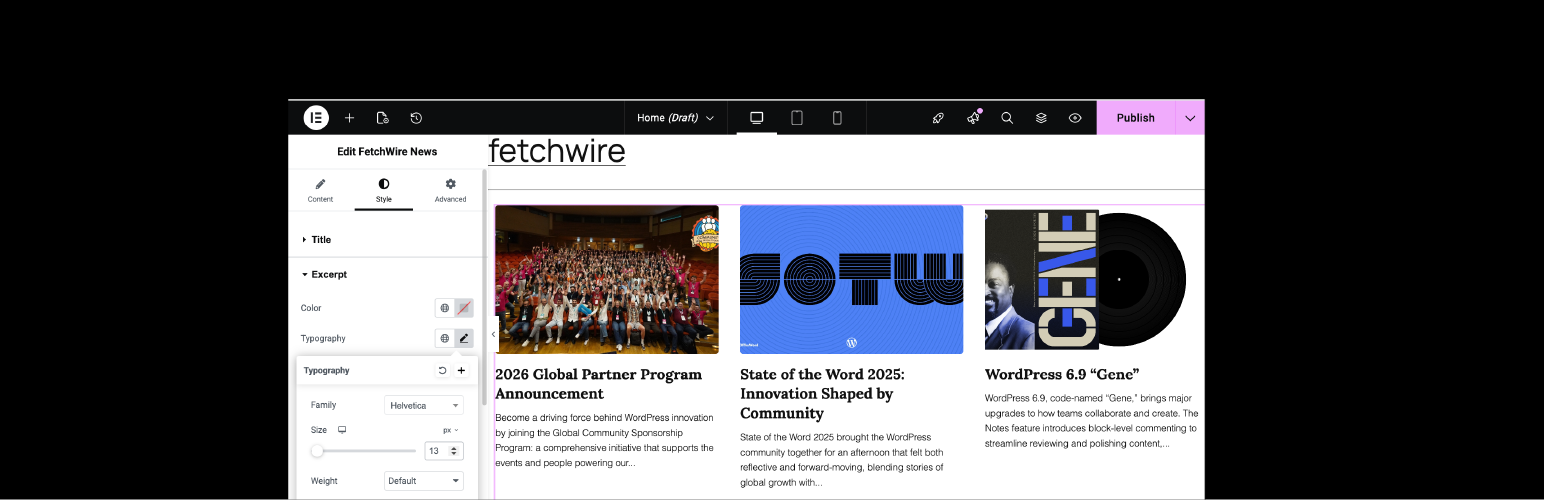
FetchWire — Remote News Feed for Elementor & Gutenberg Security & Risk Analysis
wordpress.org/plugins/fetchwirePull posts from any WordPress site into 5 beautiful layouts. Works in Elementor and Gutenberg. No plugin needed on the source site.
Is FetchWire — Remote News Feed for Elementor & Gutenberg Safe to Use in 2026?
Generally Safe
Score 100/100FetchWire — Remote News Feed for Elementor & Gutenberg has no known CVEs and is actively maintained. It's a solid choice for most WordPress installations.
The "fetchwire" v1.0.0 plugin exhibits a strong security posture based on the provided static analysis. The absence of any identified attack surface, including AJAX handlers, REST API routes, shortcodes, or cron events, is a significant strength. Furthermore, the complete absence of dangerous functions, file operations, and raw SQL queries (all SQL queries use prepared statements) indicates a commitment to secure coding practices. The high percentage of properly escaped output is also commendable, minimizing the risk of cross-site scripting vulnerabilities.
However, there are a couple of areas that warrant attention. The presence of two external HTTP requests without explicit mention of authentication or sanitization on the fetched data introduces a potential risk if the target endpoints are compromised or if the plugin does not properly validate the responses. Additionally, the complete absence of nonce checks and capability checks across all entry points (even though the attack surface is zero) suggests a lack of defense-in-depth, which could become a vulnerability if the plugin were to evolve and introduce new entry points without proper security measures.
The plugin's vulnerability history is entirely clear, with no known CVEs or past incidents. This, combined with the current clean code analysis, paints a picture of a well-maintained and secure plugin. Despite the minor concerns regarding external requests and the lack of specific authorization checks on non-existent entry points, the overall security of fetchwire v1.0.0 appears to be very good. Developers should continue to prioritize secure coding and consider adding checks for external requests in future updates.
Key Concerns
- External HTTP requests made without specified security checks
- Zero nonce checks present across entry points
- Zero capability checks present across entry points
FetchWire — Remote News Feed for Elementor & Gutenberg Security Vulnerabilities
FetchWire — Remote News Feed for Elementor & Gutenberg Release Timeline
FetchWire — Remote News Feed for Elementor & Gutenberg Code Analysis
Output Escaping
FetchWire — Remote News Feed for Elementor & Gutenberg Attack Surface
WordPress Hooks 2
Maintenance & Trust
FetchWire — Remote News Feed for Elementor & Gutenberg Maintenance & Trust
Maintenance Signals
Community Trust
FetchWire — Remote News Feed for Elementor & Gutenberg Alternatives

Starter Templates – AI-Powered Templates for Elementor & Gutenberg
astra-sites
The growing library of 300+ ready-to-use templates that work with all WordPress themes including Astra, Hello, OceanWP, GeneratePress and more

Templately – Elementor & Gutenberg Template Library: 6500+ Free & Pro Ready Templates And Cloud!
templately
Templately is an AI-powered WordPress templates cloud for Elementor and Gutenberg that offers 6,500+ ready template designs for a wide range of niches

Content Views – Post Grid & Filter, Recent Posts, Category Posts … (Shortcode, Gutenberg Blocks, and Widgets for Elementor)
content-views-query-and-display-post-page
Easy to show posts, pages, custom posts in customizable grid, list, slider, accordion... Available as Widgets (for Elementor), Shortcode, and Blocks.

ShopLentor – All-in-One WooCommerce Growth & Store Enhancement Plugin
woolentor-addons
ShopLentor – More than a WooCommerce builder. A complete growth plugin to boost conversions, UX, and sales for your store.

UiCore Animate – Free Animations, Transitions, and Interactions Addon for Elementor & Gutenberg blocks
uicore-animate
UiCore Animate adds page transitions, smooth scroll, and engaging animations to Elementor and Gutenberg blocks, for smoother, engaging experiences.
FetchWire — Remote News Feed for Elementor & Gutenberg Developer Profile
1 plugin · 10 total installs
How We Detect FetchWire — Remote News Feed for Elementor & Gutenberg
Patterns used to identify this plugin on WordPress sites during automated security audits and web crawling.
Asset Fingerprints
/wp-content/plugins/fetchwire/assets/css/style.cssfetchwire-style?ver=1.0.0